

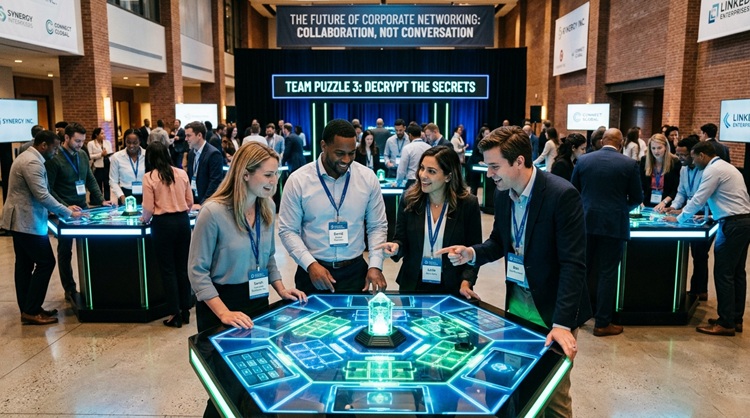
Corporate networking has changed dramatically over the last decade. Traditional formats built around conference rooms, formal presentations, and standard drinks receptions are no longer the only option for businesses trying to build stronger professional relationships. While those approaches still exist, many organisations are increasingly looking for more interactive and memorable ways to connect employees, clients, and partners.
One of the biggest shifts has been the growing popularity of immersive activities within corporate events. Businesses are recognising that people often engage more naturally when networking is built around shared experiences rather than purely formal conversation. Interactive entertainment, competitive games, and experience-led environments can break down social barriers far more effectively than traditional networking formats.
This trend has become especially noticeable following the rise of hybrid and remote working. Many employees now spend less time together physically during the working week, which means in-person events carry greater importance than before. Companies are increasingly using events not just for networking, but for rebuilding team culture, strengthening collaboration, and improving social connection.
Shared experiences create conversation more naturally than structured networking alone. Instead of relying entirely on introductions and small talk, interactive activities give people something immediate to react to together. Whether through problem-solving challenges, team competitions, or immersive games, participants often become more relaxed and engaged because attention shifts away from the pressure of formal interaction.
This is one reason competitive socialising has expanded so rapidly within the events industry. Experiences built around participation rather than passive entertainment tend to leave stronger impressions on attendees. Guests are far more likely to remember how an event made them feel than the details of a traditional meeting room presentation.
Another important factor is inclusivity. Formal networking environments can sometimes feel intimidating, especially for quieter personalities or people attending large events where they know few attendees. Interactive activities help create more balanced participation because the focus moves towards shared involvement rather than purely conversational confidence.
Younger professionals have also influenced this shift significantly. Many modern employees place greater value on experiences and workplace culture than previous generations. Businesses hoping to attract and retain talent increasingly understand that social experiences matter when building stronger internal relationships and company identity.
Interestingly, immersive events are not limited to internal staff gatherings. Client hospitality has evolved in a similar direction. Businesses are recognising that memorable experiences can strengthen professional relationships more effectively than standard dinners or hospitality suites alone. Shared activities create stronger emotional connections, which often translate into more productive long-term business relationships.
Technology has played a major role in supporting this trend as well. Interactive venues now combine digital experiences, gamification, immersive environments, and live entertainment to create far more engaging event formats. These experiences appeal particularly strongly in major cities where attendees increasingly expect something distinctive rather than generic corporate functions.
London has become one of the leading locations for experience-led networking events because of the city’s strong hospitality and entertainment sectors. Companies are searching for venues that offer something beyond traditional conference facilities, often prioritising flexibility, interactivity, and atmosphere when planning events.
Organisations such as The Big Smoke Events have helped highlight how competitive socialising and immersive entertainment are influencing modern corporate events. Businesses are increasingly looking for event experiences that combine networking with genuine engagement rather than treating them as separate goals.
There is also a growing recognition that informal interactions often produce the strongest professional relationships. Structured presentations and meetings remain important, but some of the most valuable conversations happen when people feel comfortable enough to interact more naturally. Immersive activities help create those environments by encouraging teamwork, humour, and shared participation.
The hospitality industry has adapted quickly because demand for experience-led events continues rising across multiple sectors. Venues increasingly blend entertainment, food, technology, and social interaction into unified experiences rather than separating them into traditional formats.
Economic pressures have not slowed the trend significantly either. In many cases, businesses have become more selective about hosting fewer but more impactful events. Rather than organising standard networking functions that attendees quickly forget, companies often prefer creating memorable experiences that generate stronger engagement and longer-lasting impressions.
Another reason immersive activities continue growing is their social media appeal. Interactive events naturally encourage attendees to share photos, videos, and experiences online, giving businesses additional visibility and marketing benefits beyond the event itself. Memorable experiences are far more likely to be discussed and shared publicly than traditional conference formats.
At the same time, immersive networking reflects wider cultural changes in how people socialise generally. Consumers increasingly expect entertainment, interaction, and participation from hospitality experiences. Passive experiences alone are often no longer enough to capture attention in competitive social environments.
Corporate networking is therefore becoming less about simply placing people in the same room and more about creating environments where genuine interaction happens naturally. Businesses are recognising that relationships often form more effectively through shared experiences than through formal introductions alone.
As expectations continue evolving, immersive activities are likely to remain a central part of modern corporate events. Companies are no longer just organising gatherings — they are creating experiences designed to strengthen engagement, collaboration, and long-term professional relationships in ways traditional networking formats often struggled to achieve.